What Is an STCW Certificate? Maritime Training and Requirements for Seafarers
An STCW certificate is a general term used to describe documents confirming that a seafarer has completed specific training or demonstrated professional competence in accordance with the International Maritime Organization's (IMO) STCW Convention. STCW does not refer to a single universal certificate. Different training programmes and certificates may be required depending on a seafarer's position, the type of vessel and the duties performed.
One of the most important questions for individuals planning a maritime career is which training courses they need to complete. Some may require basic safety training, while others need additional certificates covering watchkeeping, navigation, firefighting or specialised vessel operations.
This article explains STCW, its essential safety training modules, the certification process and important considerations when choosing maritime training in Azerbaijan.
What Is STCW and What Does It Stand For?
STCW (Standards of Training, Certification and Watchkeeping for Seafarers) refers to the International Convention on Standards of Training, Certification and Watchkeeping for Seafarers.
The Convention was adopted under the framework of the International Maritime Organization (IMO) and establishes minimum international competence standards to support the safe operation of ships and the professional performance of seafarers.
The STCW framework serves several key purposes:
-
Establishing minimum standards for maritime professional training.
-
Ensuring that shipboard personnel are prepared for emergencies.
-
Assessing maritime safety knowledge and practical competence.
-
Defining the competencies required for different shipboard positions.
-
Establishing a common international framework for certification and watchkeeping.
STCW standards do not mean that maritime training costs are identical in every country or that all certificates are automatically accepted in every situation. The procedures of national maritime administrations and the requirements of specific positions must also be considered.
What Is STCW Basic Safety Training?
STCW Basic Safety Training (BST) provides essential safety and emergency preparedness training for seafarers assigned certain safety-related or emergency duties on board a vessel.
The training is designed to help seafarers recognise hazardous situations, respond appropriately to emergencies and contribute to their own safety and that of other crew members.
Basic safety training under Section A-VI/1 of the STCW Code covers four main areas.
1. Personal Survival Techniques (PST)
This module covers the fundamental skills required for survival at sea, including situations involving abandoning a vessel and responding to maritime emergencies.
Training includes:
-
Recognising emergency signals and alarms.
-
Correctly using lifejackets.
-
Understanding lifesaving appliances and their functions.
-
Following safe procedures when abandoning ship.
-
Applying basic survival techniques at sea.
Practical exercises allow participants to apply these skills in a safe and supervised training environment.
2. Fire Prevention and Fire Fighting (FPFF)
Fire on board a ship can pose a serious threat to the crew, cargo and the vessel itself.
This module covers the identification of fire hazards, initial emergency response principles and the appropriate use of firefighting equipment.
Participants receive training in alarm procedures, evacuation, teamwork and safe firefighting practices.
Practical training must be conducted using suitable protective equipment under the supervision of competent instructors.
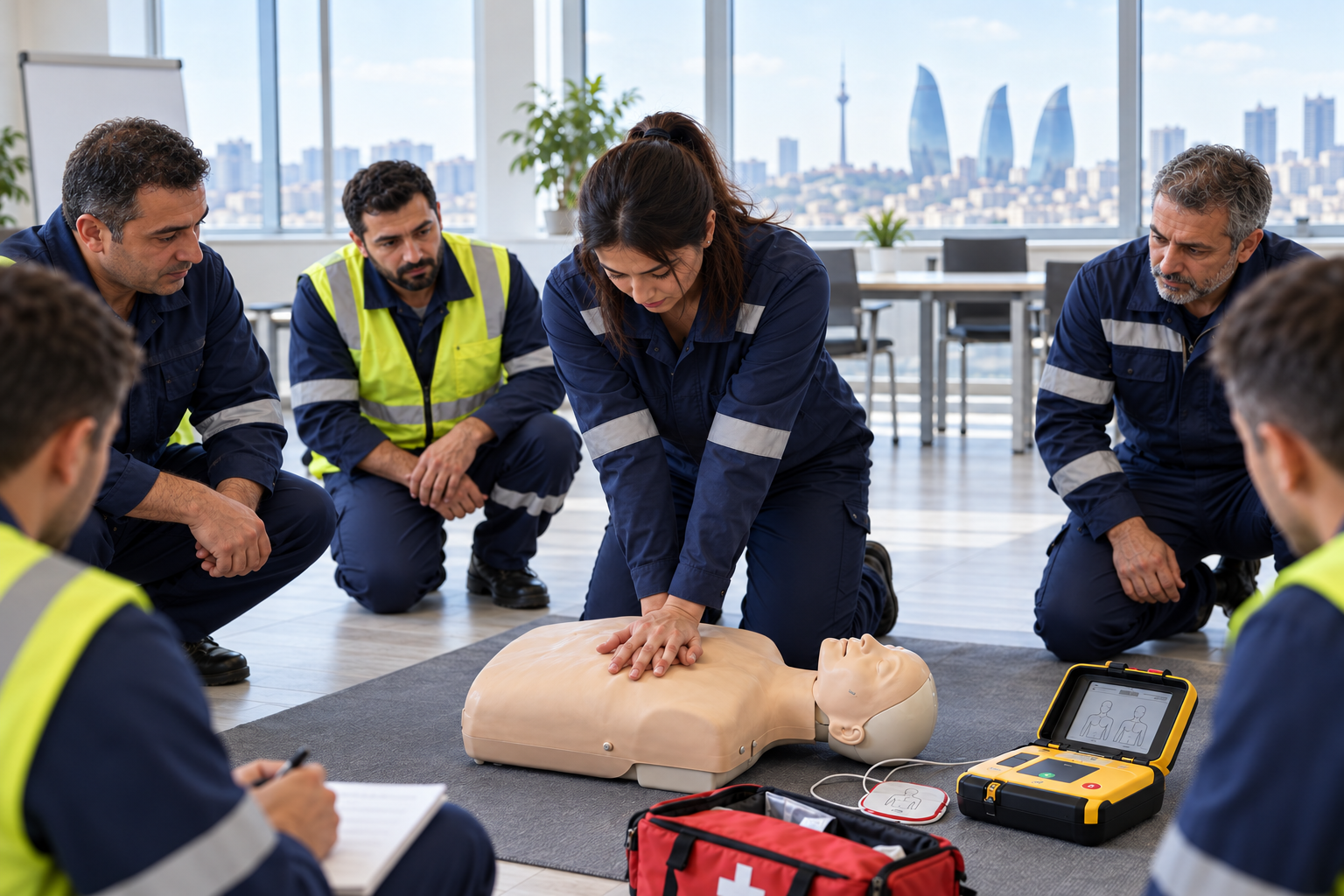
3. Elementary First Aid (EFA)
This module focuses on providing appropriate immediate assistance in the event of an accident or sudden medical emergency on board until professional medical care becomes available.
Training covers casualty assessment, requesting assistance, initial treatment of certain injuries and essential lifesaving skills.
First aid competence is particularly important at sea, where access to medical services and the time required to reach shore-based assistance may vary considerably.
4. Personal Safety and Social Responsibilities (PSSR)
This module focuses on safe, responsible and cooperative behaviour in the shipboard working environment.
Key topics include:
-
Safe working procedures.
-
Effective communication among crew members.
-
Emergency duties and responsibilities.
-
Prevention of marine pollution.
-
Cooperation and teamwork on board.
-
Prevention of and appropriate responses to violence and harassment in the workplace.
Important amendments relating to this area came into force in 2026.
What Changed in STCW Training in 2026?
On 1 January 2026, new requirements entered into force in the STCW Code's Table A-VI/1-4, which covers competence in Personal Safety and Social Responsibilities.
The amendments address the prevention of and appropriate responses to violence and harassment in the maritime workplace, including sexual harassment, sexual assault and bullying.
This development highlights that maritime safety goes beyond preventing technical accidents. A safe working environment on board also involves protecting crew members' dignity, well-being and professional relationships.
Individuals enrolling in STCW training in 2026 should confirm that the Personal Safety and Social Responsibilities module reflects the updated requirements.
Seafarers who completed their training previously should verify any additional training obligations under the procedures established by the relevant flag State and certification authority.
Which STCW Courses May Be Required for Seafarers?
There is no single training list that applies to every seafarer.
Additional training may be required depending on the individual's position, vessel type, cargo carried and assigned responsibilities.
| Training Programme | Main Purpose | Potential Participants |
|---|---|---|
| Basic Safety Training (BST) | Essential safety and emergency response skills | Crew members assigned relevant safety and emergency duties |
| Advanced Fire Fighting | Managing and coordinating firefighting operations | Personnel responsible for leading firefighting activities |
| Medical First Aid | Advanced competence in providing medical first aid on board | Seafarers assigned relevant medical first aid responsibilities |
| Proficiency in Survival Craft and Rescue Boats | Operating survival craft and rescue boats | Crew members assigned duties involving survival craft and rescue boats |
| Global Maritime Distress and Safety System (GMDSS) | Operating maritime radio communication systems | Personnel responsible for relevant radio communication duties |
| Electronic Chart Display and Information System (ECDIS) | Using electronic navigational chart and information systems | Deck officers performing relevant navigational duties |
This table illustrates the purposes of different training programmes. The specific certificates required for an individual must be determined according to their assigned duties and applicable regulatory requirements.
How to Obtain an STCW Certificate
A structured approach is recommended when completing STCW training and obtaining the appropriate certification.
Step 1. Identify Your Intended Maritime Position
The first step is to determine the position you intend to hold on board.
For example, an ordinary seaman, engine room rating, ship's electrician and navigational officer may have different training requirements.
To identify the necessary courses, review the employer's requirements and the regulations of the relevant maritime administration.
Step 2. Choose the Appropriate Training Programme
When selecting a course, verify which section of the STCW Convention and Code the programme addresses.
Do not rely solely on the course title. Review the competencies covered, admission requirements, practical training components and assessment methods.
Step 3. Verify the Training Provider's Approval Status
Before registering, it is important to verify whether the training institution holds the relevant approvals and authorisations to deliver the selected programme.
In Azerbaijan, information about the training and certification of seafarers can be obtained from the official resources of the State Maritime and Port Agency.
According to the Agency's information, Industrial Support and Training Services (IST) is listed among the institutions providing specialised training courses for seafarers.
Step 4. Complete Theoretical and Practical Training
Depending on the course, participants may be required to complete classroom instruction, practical exercises and competence assessments.
For example, personal survival training may involve practical exercises with lifesaving appliances, while firefighting courses may include supervised practical drills conducted under controlled conditions.
Step 5. Verify the Scope of the Certificate Issued
After completing the training, verify which competencies the issued document confirms and which certification procedure it relates to.
A certificate confirming completion of specialised training is not the same as a Certificate of Competency (CoC) or other professional qualification required for a particular shipboard position.
Additional documentation, relevant education, medical fitness and seagoing service may be required to work in the maritime industry.
How Long Is an STCW Certificate Valid?
It is incorrect to assume that all STCW certificates have the same validity period.
Certain competencies under the Convention require periodic refresher training or evidence that the relevant standard of competence has been maintained.
For example, some competencies related to Personal Survival Techniques and Fire Prevention and Fire Fighting require refresher training or evidence of continued competence at intervals of five years.
However, this requirement should not automatically be applied to every STCW module or type of certificate.
When planning certification renewal:
-
Check the dates stated on the document.
-
Identify the relevant STCW section.
-
Confirm the requirements of the flag State and certification authority.
-
Enrol in the appropriate refresher training where necessary.
Leaving certificate renewal until the last possible date may delay the start of employment.
Is an STCW Certificate the Same as a Seafarer's Identity Document?
No. These documents serve different purposes.
STCW training and competency documents are intended to confirm that a seafarer has completed relevant training or demonstrated particular professional competencies.
A Seafarer's Identity Document (SID) serves a separate legal purpose relating to verification of the seafarer's identity.
In addition, specific shipboard positions may require a Certificate of Competency, appropriate medical documentation and other qualifications.
Completing a training course does not mean that all these documents will be issued automatically.
What Is the Difference Between STCW and GWO Basic Safety Training?
STCW and GWO Basic Safety Training are training frameworks intended for different industries.
| Criteria | STCW | GWO Basic Safety Training |
|---|---|---|
| Primary sector | Maritime industry and shipboard personnel | Wind energy industry |
| Standard-setting body | STCW Convention under the International Maritime Organization | Global Wind Organisation |
| Training focus | Shipboard safety, survival at sea and role-specific competence | Relevant safety and emergency response skills for the wind energy industry |
| Certification | Requirements under the Convention and relevant national maritime administrations | GWO training standards and registration procedures |
These programmes may cover similar topics, such as first aid and fire safety. However, their objectives and competence requirements differ.
Therefore, certification from one programme does not automatically replace the requirements of the other.
Where Can You Take STCW Training in Baku?
Individuals seeking STCW training in Baku can explore the maritime training programmes offered by Industrial Support and Training Services (IST).
IST's official website presents STCW-related programmes in the following areas:
-
Training for maritime ratings.
-
Navigation and communication training.
-
Shipboard personnel management.
-
Basic safety training.
-
Firefighting and rescue operations.
-
Medical training for seafarers.
The current availability of specific courses, enrolment requirements, course duration and fees should be confirmed directly with IST.
Corporate clients may also arrange training plans tailored to their crew members' positions, existing certifications and the operational requirements of their vessels.
Explore STCW training programmes and registration requirements:
IST — Maritime Courses and STCW Training
Frequently Asked Questions About STCW Certification
Can You Work on a Ship Without an STCW Certificate?
This depends on the type of vessel, the individual's position and the applicable requirements. Appropriate training and certification requirements must be fulfilled for shipboard roles covered by the relevant provisions of STCW.
Can Someone Without Maritime Experience Attend an STCW Course?
Some entry-level training programmes may be suitable for beginners. However, admission requirements, medical fitness and any additional requirements for the intended position should be verified separately.
Can STCW Training Be Completed Entirely Online?
Certain theoretical components may be delivered through appropriately approved learning formats. However, online instruction alone is not sufficient for modules requiring practical competence.
Are STCW Certificates Automatically Accepted in Every Country?
STCW is an international convention, but acceptance of a particular certificate may depend on the flag State's recognition and certification procedures, the position concerned and the type of document.
Do You Have to Repeat All Courses to Renew STCW Certification?
Not always. Renewal requirements depend on the certificate type and the applicable competence maintenance requirements. Any necessary refresher training and documentation should be confirmed individually.
How Much Does an STCW Course Cost?
Fees vary depending on the course type, programme content and training provider. For current prices and upcoming training dates at IST, contact the training centre directly.
Conclusion
STCW is an international convention establishing standards for the training, certification and watchkeeping of seafarers. Individuals planning a maritime career should focus not only on the title of a certificate but also on the competencies it confirms and its relevance to their intended duties.
Basic safety training, role-specific professional qualifications and timely certificate renewal are essential considerations when planning a career at sea.
Choose the STCW training that matches your maritime career goals. Explore IST's maritime courses and enquire about programme details, registration requirements and upcoming training dates.