What Is IRATA Level 1? Training, Entry Requirements and Certification
IRATA Level 1 is the entry-level international certification for individuals seeking to begin a professional career in industrial rope access. A technician who has successfully completed the required training and obtained Level 1 certification may perform specified rope access operations under the supervision of an IRATA Level 3 technician.
To obtain IRATA Level 1 certification, candidates must meet the entry requirements, complete theoretical and practical training at an approved training centre, and successfully pass an assessment conducted by an independent IRATA Assessor.
Who is eligible for IRATA Level 1 training? How long does the course take, what skills are taught, and where can certified technicians work?
This article answers these questions in detail.
What Is IRATA?
IRATA (International Industrial Rope Access Trade Association) is an international professional organisation that establishes training, technical competence and certification requirements for the industrial rope access industry.
Industrial rope access is a method of accessing difficult-to-reach work locations and performing specified operations using specialised rope systems and safety equipment.
Rope access techniques may be used for:
-
Inspection and maintenance of high-rise building façades.
-
Inspection of difficult-to-access structures at oil and gas facilities.
-
Inspection and maintenance of industrial equipment.
-
Installation and repair work on steel structures.
-
Maintenance of certain components of wind turbines.
-
Inspection of bridges and other engineering structures.
The use of industrial rope access should be determined by the nature of the work, the findings of the risk assessment and the selection of a suitable access method.
Rope access is not necessarily required for every activity involving work at height. In some situations, mobile elevating work platforms, scaffolding or collective fall protection measures may be more appropriate.
What Is IRATA Level 1 and Who Is It For?
IRATA Level 1 is the entry level of the IRATA certification scheme.
It is primarily intended for individuals who wish to begin a career in industrial rope access and obtain internationally recognised certification in rope access techniques.
Potential candidates include:
-
Individuals new to industrial rope access.
-
Technical personnel working in construction and industrial environments.
-
Professionals with previous experience working at height.
-
Technical personnel in the oil, gas and energy industries.
-
Individuals seeking to add rope access competence to their existing professional qualifications.
IRATA Level 1 can also provide an entry route for people without previous technical experience. However, candidates must have the physical capability and safety awareness required to participate in the training.
Important: Level 1 certification does not authorise a technician to independently supervise rope access operations. IRATA Level 1 technicians must work under the supervision of an IRATA Level 3 technician.
IRATA Level 1 Entry Requirements
According to IRATA's official training requirements, candidates must meet certain minimum criteria.
1. Minimum Age Requirement
Candidates must be at least 18 years old on the first day of training.
2. Physical Fitness
Industrial rope access requires physical strength, mobility, coordination and concentration.
Candidates must be physically capable of completing the required training activities safely.
Having a particular medical condition does not automatically mean that an individual is ineligible. The key consideration is whether the condition may affect the person's ability to perform rope access activities safely.
3. Medical Declaration
IRATA requires candidates to declare any known medical conditions or contraindications that could affect their ability to work safely.
Additional medical documentation may be required where relevant medical concerns exist.
4. Safe Working Practices and Personal Responsibility
Rope access activities require strict compliance with established procedures, correct use of equipment and adherence to supervisory instructions.
A training centre may assess a candidate's suitability for participation if there are reasonable concerns regarding physical fitness or safe behaviour.
How to Obtain IRATA Level 1 Certification
Obtaining IRATA certification involves completing several stages.
Step 1. Choose an Approved IRATA Training Centre
First, verify that the training provider holds IRATA Trainer Member Company status.
The provider's current membership status can be checked through IRATA's official membership directory.
Step 2. Check the Entry Requirements
Review the age and medical requirements.
Contact the training centre to confirm the documents required for registration, the language of instruction and the arrangements for practical training.
Step 3. Complete IRATA TechConnect Registration
Under IRATA's current registration procedures, candidates are required to create a TechConnect account and complete identity verification.
Up-to-date registration instructions should be obtained from IRATA's official website.
Step 4. Attend Theoretical and Practical Training
Under the official IRATA training scheme, the course consists of a minimum of 30 hours of training delivered over four days, followed by a separate assessment day.
This represents IRATA's minimum training requirement. The specific timetable, overall course duration and fees should be confirmed with the chosen training centre.
Step 5. Pass an Independent Assessment
Candidates' theoretical knowledge and practical skills are evaluated by an IRATA International Assessor.
The assessment examines the safe execution of practical tasks and the candidate's understanding of relevant theoretical principles.
Attendance at a training course does not automatically guarantee certification.
Step 6. Complete the Certification Process
Once all requirements have been met and the certification has been approved by IRATA, the candidate receives the relevant certification documents.
For initial certification, these include a certificate, identification card and logbook for recording rope access work experience.
What Is Covered in IRATA Level 1 Training?
The IRATA Level 1 programme covers the fundamental knowledge and skills required to work safely in industrial rope access.
| Training Area | Key Knowledge and Skills |
|---|---|
| Rope access principles | Understanding the operating principles of rope access systems |
| Equipment inspection | Checking the condition of equipment before use |
| Risk assessment | Understanding work procedures, risks and control measures |
| Rope access manoeuvres | Performing specified techniques under instructor supervision |
| Communication and teamwork | Following instructions and communication procedures during operations |
| Basic rescue skills | Performing selected basic rescue exercises in a training environment |
| Emergency preparedness | Understanding rescue plans and emergency communication procedures |
Rope access operations require specialised equipment and supervised practical training.
Technical skills such as rope rigging, rescue manoeuvres and other rope access techniques should not be learned solely from written instructions or online articles.
Differences Between IRATA Level 1, Level 2 and Level 3
The IRATA certification scheme is divided into different levels of competence and responsibility.
| Criteria | IRATA Level 1 | IRATA Level 2 | IRATA Level 3 |
|---|---|---|---|
| Competence level | Entry-level technician | Experienced technician | Advanced technician and rope access safety supervisor |
| Primary role | Performing specified rope access tasks | Performing more complex technical and rescue operations | Supervising rope access safety and providing technical leadership |
| Supervision | Under Level 3 supervision | Under Level 3 supervision | May undertake supervisory responsibilities with appropriate competence |
| Entry and progression | Initial certification | Previous certification and documented experience | Higher experience and competence requirements |
How Can You Progress to IRATA Level 2?
An IRATA Level 1 technician wishing to upgrade to Level 2 must meet the relevant certification requirements.
IRATA's general upgrade requirements include at least one year of relevant experience and 1,000 hours of rope access work, properly recorded and verified in the technician's logbook.
Once these requirements have been met, the technician must complete the appropriate training and assessment process.
How Long Is an IRATA Certificate Valid?
IRATA certification is generally valid for three years.
When the certification period expires, the technician must complete the required revalidation training and assessment.
Under IRATA requirements, technicians who have not undertaken rope access work for 180 days or more are also subject to refresher training requirements before returning to operational duties.
Holding a valid certificate does not automatically authorise unrestricted work at every site.
Employers must independently assess task-specific competence, workplace risks and applicable local requirements.
Where Can You Work with an IRATA Certificate?
IRATA training may be valuable across a wide range of industries that use industrial rope access methods.
Potential areas of employment include:
-
Maintenance at oil and gas facilities.
-
Inspection of industrial structures.
-
Façade work on high-rise buildings.
-
Maintenance at energy facilities.
-
Repair and painting of steel structures.
-
Inspection of bridges and engineering structures.
However, IRATA certification does not replace the technical qualifications required for every specialised occupation.
For example, a rope access technician performing welding, electrical work or non-destructive testing (NDT) may need additional trade-specific competence and the required qualifications or documentation.
IRATA Level 1 certification does not guarantee employment or a specific salary.
IRATA Training vs. General Working at Height Training
Although IRATA training and general working at height safety training are related, they are not equivalent programmes.
General working at height training focuses on identifying fall hazards, selecting appropriate protective measures and organising work activities safely.
The IRATA programme, on the other hand, covers specialised technical competence and assessment for performing industrial rope access operations.
For example, general working at height training may be appropriate for a technician operating from a work platform. However, someone performing specialised rope access operations requires additional rope access competence.
The choice of training should reflect the employee's responsibilities and the specific operations they will perform.
Where Can You Take an IRATA Level 1 Course in Baku?
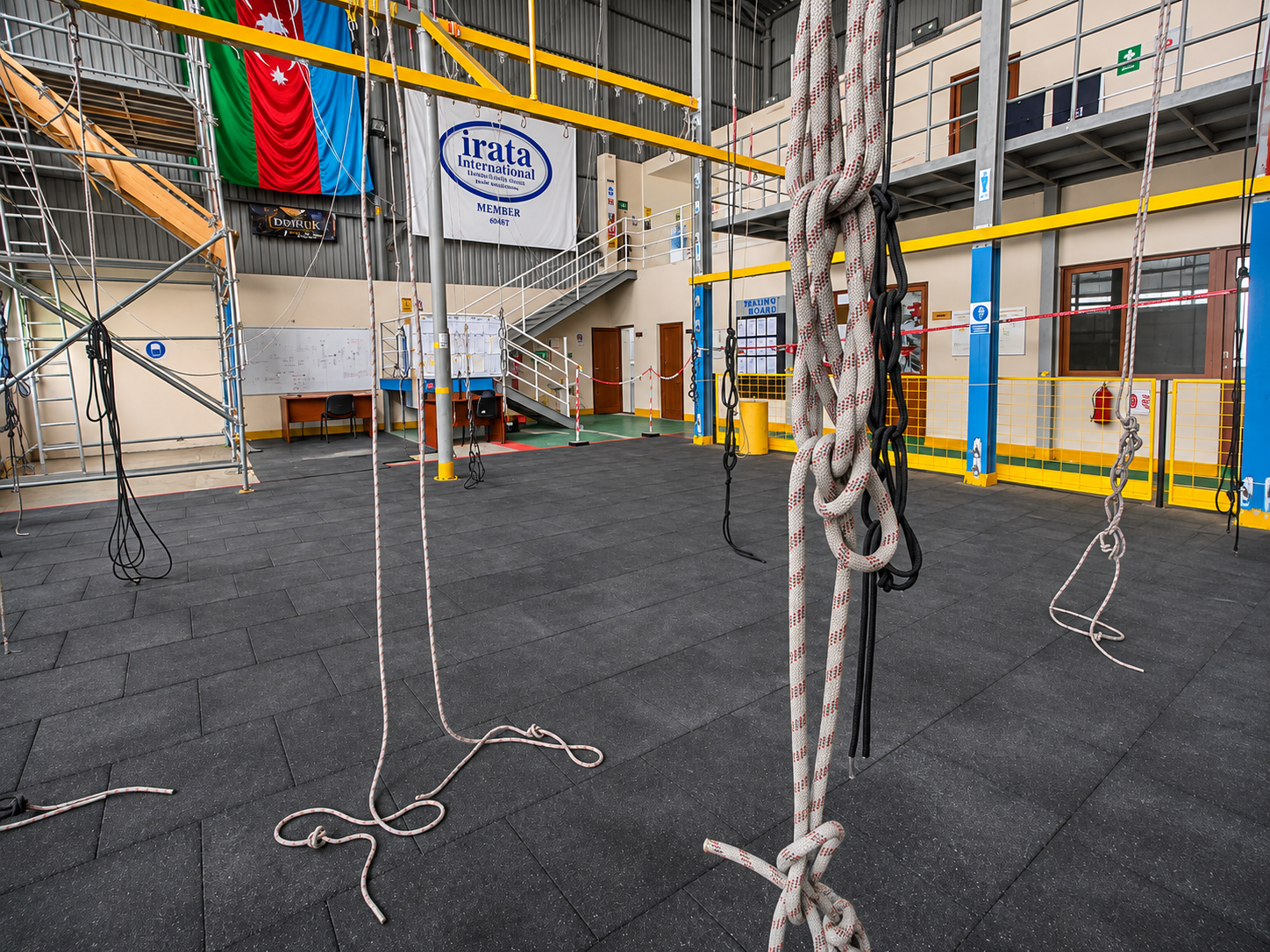
Individuals seeking IRATA training in industrial rope access in Baku can explore the Rope Access IRATA certified programme offered by Industrial Support and Training Services (IST).
IST is listed in the official IRATA International membership directory as a Full Trainer, under membership number 6048/T.
This status can be verified through IRATA's official membership directory.
Before enrolling, participants should confirm the following information directly with IST:
-
Upcoming IRATA Level 1 training dates.
-
Location of the training and assessment.
-
Language of instruction.
-
Current course fees.
-
Documents required for registration.
-
Practical training and assessment arrangements.
Learn more about IRATA training at IST:
Rope Access IRATA certified — IST Official Training Page
Frequently Asked Questions About IRATA Level 1
Can Someone Without Previous Experience Enrol in IRATA Level 1 Training?
Yes. IRATA Level 1 is an entry-level certification. Previous rope access experience is not generally required for initial admission. Candidates must meet the age, medical fitness and safe participation requirements.
How Many Days Does an IRATA Level 1 Course Take?
IRATA's standard minimum requirement is 30 hours of training over four days, followed by a separate one-day assessment. Individual training centre schedules may vary.
Can You Work Independently with an IRATA Level 1 Certificate?
No. IRATA Level 1 technicians are required to perform rope access tasks under Level 3 supervision.
Is IRATA Certification Internationally Recognised?
IRATA operates an international certification scheme used in industrial rope access projects across various countries. However, acceptance by individual employers or national authorities may be subject to additional requirements.
Can You Obtain IRATA Level 1 Certification Online?
IRATA Level 1 certification requires practical training and an independent assessment. Completing an online theoretical course alone is therefore insufficient to obtain IRATA Level 1 certification.
How Much Does an IRATA Level 1 Course Cost?
Course fees vary depending on the training centre and the services included. Current fees and enrolment conditions at IST should be confirmed directly with the training provider.
Conclusion
IRATA Level 1 is the entry-level international certification for individuals seeking to begin a career in industrial rope access.
Before enrolling, candidates should understand the entry requirements, practical training components, assessment procedures and the scope of responsibilities permitted under Level 1 certification.
Find out about upcoming IRATA Level 1 training dates and registration requirements. Explore IST's Rope Access IRATA certified programme and enquire about suitable training opportunities.